“Baddie skincare routines are cute until you realize you’ve been treating oily skin like dry skin for 6 months.”
At some point in life, every skincare beginner suddenly becomes a certified skincare detective.
You wake up one random morning, stare at your forehead in sunlight, and think:
“Wait… do I actually have oily skin?”
And suddenly your entire personality becomes:
- checking pores in mirrors,
- touching your nose every 14 minutes,
- and aggressively searching:
“Why is my face shiny but also dry?”
Honestly?
The skincare industry has confused people so much that half of us genuinely do not know whether our skin is:
- oily,
- dry,
- sensitive,
- combination,
- or simply stressed because life is emotionally attacking us daily.
One influencer says:
“If your face feels tight after washing, that means it’s clean.”
Another says:
“If your moisturizer burns a little, it’s normal.”
Meanwhile your skin barrier is somewhere in the corner crying quietly.
And then beginners start buying:
- harsh acne products for dry skin,
- thick moisturizers for oily skin,
- exfoliators strong enough to remove wall paint,
- and serums recommended by people whose skincare routine costs more than rent.
Then suddenly:
- breakouts happen,
- irritation starts,
- skin becomes greasy AND flaky,
- and everyone blames skincare itself.
But honestly?
The problem is usually not skincare.
The problem is using the WRONG products for your actual skin type.
Your skin type decides:
- how much oil your skin produces,
- how sensitive your skin is,
- what products work better,
- and why your face sometimes behaves like a toxic situationship.
And once you finally understand your skin type?
Skincare becomes MUCH less confusing.
If you’re completely new to skincare and still trying to understand the basics, first read our:
👉 Beginner Skincare Guide
Because honestly, nobody should be buying acids before understanding whether their skin even wants hydration or oil control first.
What Does “Skin Type” Actually Mean?
Your skin type basically describes:
- how your skin behaves naturally,
- how much oil it produces,
- how easily it gets irritated,
- and what kind of skincare products your skin prefers.
Think of it like your skin’s personality.
Some skin types are calm and balanced.
Some wake up every morning and choose violence.
According to the American Academy of Dermatology, understanding your skin type helps you choose skincare products that support your skin instead of damaging it.
Because skincare is NOT one-size-fits-all.
The moisturizer your friend loves may make your face look like an oil-producing machine by lunchtime.
And the acne face wash everyone on TikTok swears by?
Your dry skin may experience that like emotional trauma.
Your:
- hormones,
- weather,
- stress,
- sleep,
- diet,
- water intake,
- and skincare habits
all affect how your skin behaves.
Which honestly explains why your skin sometimes breaks out right before important events like it has personal hatred toward you.
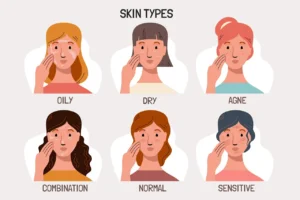
The 5 Main Skin Types
H3
1. Oily Skin
If your forehead becomes shinier than your future after one online skincare purchase…
you probably have oily skin.
Signs of oily skin:
- greasy forehead,
- shiny nose,
- clogged pores,
- frequent acne,
- makeup disappearing quickly,
- skin becoming oily again shortly after cleansing.
Oily skin naturally produces excess sebum (oil).
And honestly?
Oily skin is not “bad.”
In fact, oily skin sometimes ages slower because natural oils help maintain moisture.
But many oily skin people accidentally destroy their skin barrier trying to remove EVERY trace of oil from their face.
Then their skin panics and produces EVEN MORE oil.
Which is honestly very manipulative behavior from skin.
If your skin constantly feels greasy, irritated, or breakout-prone, explore:
👉 Skin SOS Guide
because sometimes your skin barrier is simply begging for peace.
2. Dry Skin
Dry skin usually feels:
- tight,
- rough,
- flaky,
- uncomfortable,
- or dull.
Especially after washing your face.
If your face feels like it survived emotional damage every winter…
dry skin may be the reason.
Dry skin lacks enough moisture and natural oils.
People with dry skin often apply moisturizer and immediately feel like their skin absorbed it spiritually.
Dry skin usually needs:
- gentle cleansers,
- barrier-supporting moisturizers,
- hydration,
- and less aggressive exfoliation.
And no…
using harsh “oil control” face washes on dry skin will not magically help.
That’s basically bullying your skin.
According to the Cleveland Clinic, over-cleansing and harsh products can worsen dry skin and irritation.
3. Combination Skin
Combination skin means:
your face cannot commit to one personality.
Usually:
- oily forehead/nose/chin
- normal or dry cheeks
Basically your T-zone is having a completely different life experience than the rest of your face.
Combination skin is actually VERY common.
And honestly?
It can feel confusing because:
one part of your face wants hydration…
while another part starts producing oil like it has bills to pay.
If skincare routines still confuse you emotionally, read:
👉 Daily Flow Skincare Guide
because beginner skincare should not feel like solving advanced mathematics before bed.
4. Sensitive Skin
Sensitive skin gets irritated easily.
Your skin may react dramatically to:
- fragrance,
- harsh scrubs,
- weather changes,
- active ingredients,
- over-exfoliation,
- or random skincare experiments inspired by social media.
Sensitive skin people test one new product and suddenly their face becomes:
- red,
- itchy,
- burning,
- or personally offended.
Honestly?
Sensitive skin behaves like someone who takes everything personally.
Many beginners accidentally damage their skin barrier by mixing too many strong ingredients together without understanding what those ingredients actually do.
That’s why understanding skincare ingredients matters.
You can explore:
👉 Glow Lab Ingredient Guide
to understand ingredients like:
- niacinamide,
- salicylic acid,
- retinol,
- hyaluronic acid,
before confidently putting them on your face because a stranger online said:
“Trust me guys.”
5. Normal Skin
Normal skin is usually:
- balanced,
- comfortable,
- not too oily,
- and not excessively dry.
Honestly?
People with naturally balanced skin are God’s strongest soldiers.
Because the rest of us are out here fighting for survival with acne patches, moisturizers, and emotional resilience.
But even normal skin still needs:
- cleansing,
- hydration,
- sunscreen,
- and protection.
Healthy skin still requires maintenance.
Nobody naturally survives pollution, stress, UV rays, bad sleep schedules, and dehydration completely untouched.
The Simplest Way To Find Your Skin Type
Good news:
you do NOT need expensive skin analysis machines or dramatic skincare consultations immediately.
Here’s the easiest beginner test:
Step 1
Wash your face using a gentle cleanser.
Step 2
Do NOT apply any skincare afterward.
No moisturizer.
No serum.
No sunscreen.
Nothing.
Step 3
Wait 30–60 minutes.
Now observe your skin honestly.
If your skin feels:
- shiny everywhere → oily skin
- tight/flaky → dry skin
- oily only in T-zone → combination skin
- irritated easily → sensitive skin
- balanced and comfortable → normal skin
Simple.
Your skin is not trying to become a Marvel mystery character.
Social Media Made Everyone Hate Normal Skin
One dangerous thing social media did?
It convinced people that:
- pores are illegal,
- texture is unacceptable,
- and healthy skin must look filtered 24/7.
Suddenly everyone believes they need:
- glass skin,
- poreless makeup,
- luxury serums,
- and routines involving 14 unnecessary products.
Meanwhile real skin naturally has:
- texture,
- pores,
- oil,
- dryness,
- and occasional breakouts.
That is NORMAL.
Healthy skin does NOT mean:
perfect skin.
And honestly?
Half the skincare anxiety people experience today comes from comparing their real skin to edited social media content.
For more relatable skincare struggles and beginner skin problems, visit:
👉 Glow Situations
because trust me…
your skin is not the only one acting dramatic before important events.
Frequently Asked Questions About Skin Types
How do I know my skin type?
Wash your face, wait 30–60 minutes without products, and observe whether your skin becomes oily, dry, balanced, or irritated.
Can skin type change over time?
Yes. Hormones, weather, stress, age, diet, and skincare habits can all affect your skin type.
Is oily skin bad?
No. Oily skin naturally produces more sebum, but healthy oily skin can still look balanced and healthy with proper skincare.
Why does my skin feel oily and dry at the same time?
You may have combination skin or a damaged skin barrier caused by harsh skincare products.
What skin type is most common?
Combination skin is one of the most common skin types.
Final Thoughts
Finding your skin type honestly makes skincare SO much easier.
Because once you understand what your skin actually needs…
you stop buying random products purely because the packaging looked emotionally healing.
And remember:
Your skin is not supposed to look filtered 24/7.
Real skin has:
- pores,
- texture,
- oil,
- dryness,
- breakouts,
- and occasional emotional breakdowns.
That’s normal.
Healthy skin is not about perfection.
It’s about understanding your skin instead of fighting it every single day.